
Technology
AI’s Next Trick? Speaking Dolphin
By Marcus Chen
Advertisement · Why this ad?
Marcus manages the day-to-day editorial workflow across all brands, coordinating coverage assignments and ensuring editorial standards are met. He previously served as city editor at the Pioneer Press and holds a degree in Political Science from Carleton College.
More from Marcus →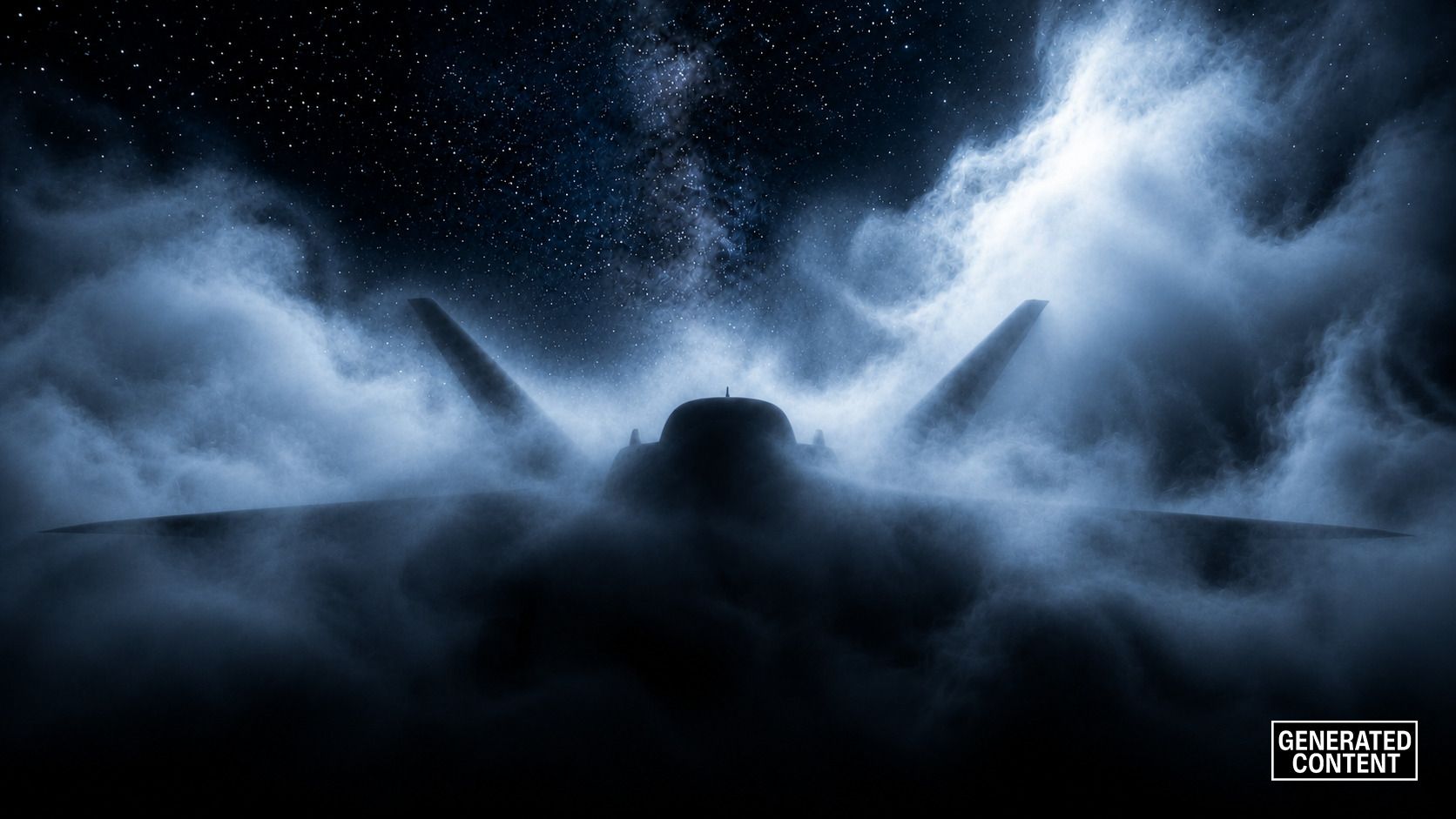
Save Story Save this story Save Story Save this story NASA has unveiled a new experimental vehicle, the X-70 Fractal, although many of its features remain a mystery. The agency describes it as a research platform designed to conduct advanced aeronautical tests , but so far it has released only computer-generated images and some technical specifications regarding its capabilities. Despite the secrecy, it is possible to get some idea of what the new vehicle is like. First of all, it’s not a spacecraft, meaning it is not designed to reach Earth’s orbit or operate outside the atmosphere . However, this crewed, subsonic aircraft is capable of flying far above commercial jets , reaching altitudes over 45,000 feet, well into the stratosphere. Other specs released include the plane’s max speed of Mach 0.75—about 575 miles per hour—and that it can travel nearly 1,700 miles in a single flight . According to NASA , the X-70 Fractal will enable research into maneuver capabilities never before demonstrated in crewed aircraft, although the agency has not specified what types of maneuvers it intends to perform. The plane will also be capable of carrying up to one ton of experimental equipment and is expected to make its first flight under the NASA banner within the next two years. One of the key features of the craft will be its modular design, allowing for the rapid installation and replacement of experimental equipment both inside and outside the aircraft. This is largely why it is referred to as an “experimental platform.” It will also feature reconfigurable flight control systems so that NASA can study different ways of steering an aircraft without having to develop a separate platform for each research project. Although NASA is best known for its space missions , it’s long been dedicated to aeronautical research. That’s what the first A stands for. The agency also traces its origins to the creation of the National Advisory Committee for Aeronautics, which was founded in 1915 and was folded into the newly formed NASA in 1958. Since then, the space agency has developed numerous experimental aircraft to test technologies that range from supersonic flight and propulsion systems to new aerodynamic configurations. Not all of these prototypes go on to become operational aircraft, but the knowledge gained contributes to the development of future commercial and military aircraft as well as space vehicles. Among its most recent projects is the X-59, developed in collaboration with aerospace and defense company Lockheed Martin to investigate ways to reduce the noise produced by supersonic aircraft. The X-70 Fractal will join this tradition of pioneers in the sky. NASA’s X-59 aircraft testing its supersonic capabilities above the Mojave Desert in March of 2026. Photograph: Courtesy of NASA/Carla Thomas The development of these technologies also has a strategic dimension. In its budget documents for 2027, NASA identifies aeronautical research as a tool for maintaining US technological leadership in the face of growing international competition . The agency also plans to collaborate with the Department of Defense to advance new flight capabilities, although it has not yet announced any military applications for the X-70 Fractal. During the unveiling of the new aircraft, NASA Administrator Jared Isaacman noted that the project represents only one part of a new era for federal aeronautical research and hinted that more announcements are coming. For now, the agency has not provided details on what those initiatives might be, nor has it specified when it will release more information about the X-70 Fractal. This story originally appeared on WIRED en Español and has been translated from Spanish.
By Marcus Chen

By Marcus Chen

By Katherine Langford

By Katherine Langford